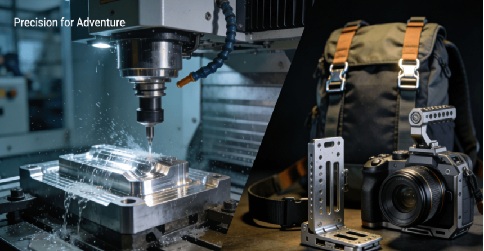
Introduction
Off-the-shelf travel gear is not usually the first choice for outdoor enthusiasts, professional photographers, and other special travelers. Maybe a light and hard case for drone or a specially designed insert for camera lenses that are not standard. Finding a good supplier of Custom Travel Equipment can become a nightmare of very high prices, waiting for a long time, and even worrying about quality control. Usually low-volume customization through traditional methods uses artisans, whose processes are not standardized and do not have a quality control system in place. This typically leads to costs that are not very competitive, delivery times being quite a surprise, and parts being inconsistent, all of which ultimately result in the quality and durability of the finished item getting compromised.
In this article, we examine in detail how Travel Gear Manufacturing can be optimized from design to production by working with leading experts in advanced precision manufacturing. This includes working with experts in Design for Manufacturability (DFM), materials science, and supply chain management, often incorporating cutting-edge technology such as CNC turning, to improve quality while achieving substantial optimization in quotes for CNC turning parts and reductions in production time.In the sections that follow, we examine this revolution in manufacturing by addressing five crucial issues.
Why Can’t Off-the-Shelf Travel Gear Meet the Demands of High-End Exploration and Professional Photography?
Off-the-shelf products are made for the typical user and typical use-case scenario. However, elite users have very different needs – for example polar expeditioners who need their equipment to work flawlessly at -40 degrees, or wildlife photographers who require gimbal heads that can lock a 600mm lens with zero play. Their requirements will ultimately fall under three main categories: extreme light weighting, highly reliable in unforgiving environments (humidity dust high-impact), and accurately, specially designed interfaces for particular instruments. Mass-produced gear makes compromises by nature, to cut down on cost and appeal to a broad audience.
For instance, a carabiner might be strong, but its pin may not be hardened to withstand constant rope abrasion; a camera case from the mass market will hardly have foam that fits a unique set of lenses perfectly, which can result in causing damages during transit. Reports show that equipment failure is one of the top causes of distress calls in wilderness. For professionals who are operating in remote regions, their gear is more than just a tool, it is a vital safety element. Therefore, the difference between “good enough” and “mission-critical” is what creates the need for genuine customization, which is the basis of professional-grade Travel Gear Manufacturing.
From Sketch to Product: What is the Typical OEM Collaboration Process for Custom Travel Equipment?
A streamlined OEM process, as mentioned, is one that converts the idea into a product through collaboration in a structured way. The process includes concept and design alignment, followed by the crucial step of Design for Manufacturability (DFM) analysis, where the competent OEM CNC turning services service provider adds significant value to the entire process.
Then, prototypes are built, and testing takes place, followed by low-volume production to test the entire production and assembly process. Finally, volume production takes place, and quality is controlled. It is extremely important to work with a certified OEM CNC turning service provider like CNC Protolabs, as their OEM CNC turning service is highly standardized and quality-controlled from the first part to the last.
How Does Precision CNC Turning Technology Shape the Core Components of High-Performance Custom Travel Gear?
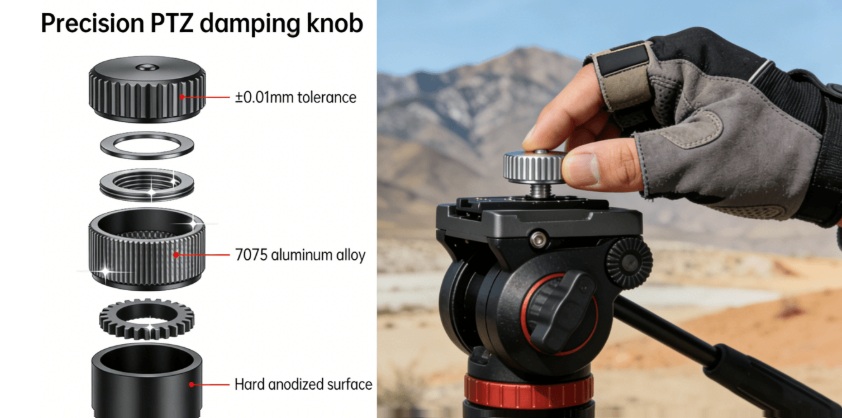
Precision CNC turning is the fundamental technology behind the development of “skeletons” and “joints” in top-shelf travel gear. This technology employs computer-aided rotation to shape precise metal parts directly from raw stock metal.
Engineering Precision Components
Custom CNC turning parts are the building blocks of premium gear, including titanium axle pins and aluminum damping knobs, renowned for their ability to meet specifications within ±0.01mm. This ensures parts are interchangeable and work reliably over their lifespan. However, the choice of material also plays a vital role in the development of premium gear. For instance, aircraft aluminum has a high strength-to-weight advantage, titanium has high strength with significant weight reduction, and stainless steel provides the highest corrosion resistance in hostile environments.
Collaborative Manufacturing Services
True Custom CNC Turning Services represent the ultimate form of collaboration to realize value. This goes beyond mere machining to include the optimal development of both design and machining processes.
- The Power of Collaborative Engineering
Collaborative engineers work closely with clients from the start, utilizing Design for Manufacturability techniques to enhance concepts.
- Optimizing the Manufacturing Path
For complex parts, experts decide on the best process. This entails evaluating if precision turning alone is adequate or if a combination of turning and milling would be more efficient. This results in maximum material yield and part quality.
What Are the Main Factors Influencing Custom CNC Turning Parts Quotes, and How Can Costs Be Optimized?
To control costs and get the best possible price, it is vital to comprehend what makes up a CNC turning parts quote.
Part Design and Specification Drivers
These are the primary drivers of a part’s ultimate cost. Some of the elements include geometric complexity, tolerance, material, and finish.
- Geometry and Tolerances
Part complexity, such as deep hole parts or thin walls, is a significant contributor to overall costs, mainly due to specialized tooling required to make such parts. Tolerances are one of the largest drivers of a part’s ultimate cost, with a 0.025mm tolerance versus a 0.1mm tolerance potentially raising costs exponentially.
- Material and Finishing
The material selection directly affects the cost. For instance, titanium alloy is much more expensive compared to regular aluminum. In addition, hard-to-machine materials may cause excessive wear on the cutting tools. Additional processes such as anodizing are also costly.
Material Selection and Machinability
Material cost and machinability are primary considerations. Special material properties make them expensive. In addition, hard materials cause excessive wear on the cutting tools, thereby increasing the cost per part. The selection of the material depends on performance and cost requirements.
Beyond Price, What Certifications and Capabilities Should You Look for in a Travel Gear Manufacturing Partner?
When choosing a manufacturing partner for Custom Travel Equipment, it’s important to consider all aspects rather than price. The first step in choosing a partner for Custom Travel Equipment is to consider the Foundational Quality Management System Certifications. This includes ISO 9001, IATF 16949, or AS9100D. The partner also needs to have an Engineering Support Capability.
This includes the ability to provide free DFM analysis for significant cost savings. The partner also needs to have End-to-End Solution Ability. This includes the ability to manage the process from prototyping to production with robust planning. The partner also needs to have Inspection and Documentation. This includes FAIR reports and material certs.
Conclusion
Custom Travel Equipment is the quest for top performance and customization. Its successful implementation is reliant on strong cooperation with a precision manufacturing partner who possesses advanced technology and a thorough quality system. In addition to getting excellent products, brands can also create a stable, efficient, and cost-competitive supply chain advantage by understanding the whole chain – from design optimization and CNC turning processes to cost structures.
If you want a dependable manufacturing solution for your next innovative travel gear product and a transparent CNC turning quote, the first step should be a detailed Design for Manufacturability analysis. Upload your design files to work together with an experienced engineering team and find the best way to move ahead.
About author
This piece was contributed by a trade analyst with expertise in the design and supply chain management of outdoor equipment. He has a sustained interest in the application of materials science and precision manufacturing technologies to improve the performance of consumer products, and he aims to connect engineering principles with market requirements.
FAQs
Q: How long does it typically take to custom produce a small batch of special titanium alloy camera quick-release plates?
A: Starting from when you give the final go-ahead of the drawing until the time the product is in your hands, the whole process takes about 2-4 weeks. This timeframe accounts for programming, obtaining special material, the actual machining, and quality control stages. Although a few suppliers have express service that could potentially reduce this to 1-2 weeks, it will depend on the complexity of the part.
Q: How can consistency be ensured between parts in a small-batch custom order?
A: The backbone of consistency is the manufacturers level of process control. It is imperative to pick a factory that is certified with standards like ISO 9001 for this reason. They use SPC (Statistical Process Control) and first-article as well as in-process inspections to make sure all parts in the batch fit the specs.
Q: Is it feasible to CNC machine parts with very thin walls in my design?
A: Although it is possible, machining of thin-walled parts is very challenging. Thin-walled parts are susceptible to distortion; Therefore, the professional manufacturer will optimize the tool paths, apply high-speed machining strategies, and use effective fixturing solutions to control this issue. When the design for manufacturing (DFM) is held, engineers will check the thin-wall elements of the design and make reinforcements or changes to the process.
Q: What kind of surface finish is suitable for outdoor equipment that is often exposed to seawater or rainfall?
A: Hard anodizing is a great option for aluminum. Parts that are anodized this way have a drastically improved surface that is much harder and resistant to wear and corrosion. In the case of stainless steel, the best option is to use the passivation process to enhance the resistance against rusting. Of course, the choice also depends on the main material and the intended look.
Q: How do I prepare tech files for customization for the first time to get a quick and exact price?
A: You should have a 3D model ready (e.g. STEP IGES) and a 2D drawing depicting all the essential dimensions tolerances material, and surface finish requirements. Being properly prepared will greatly cut down on back and forth and will allow the supplier to give you a quote for CNC turned parts that is very accurate.

