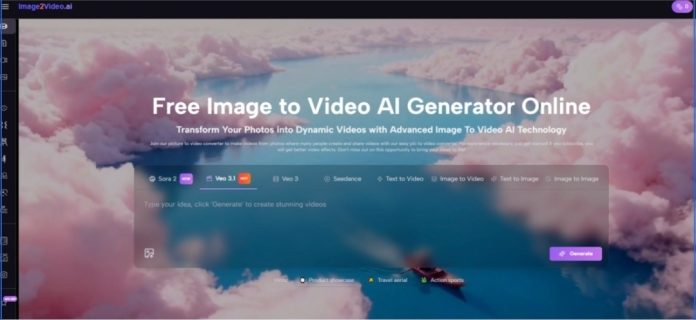
A lot of ranking articles about AI tools confuse visibility with usefulness. A platform may be famous, visually impressive, or constantly discussed online, yet still be the wrong fit for most users. That is especially true in image-to-video generation, where the real job is not merely to create motion, but to create motion that keeps the original image meaningful. This is why Image to Video AI deserves serious attention. It approaches the problem from the user’s side: start with a still image, define the motion, set a few practical parameters, and finish with something that can actually be published.
The category has matured quickly because it solves a real production imbalance. Most creators, brands, and small teams already own thousands of images. What they do not own is the time or budget to manually turn those images into motion assets at scale. Image-to-video websites now fill that gap. The challenge is knowing which platform is good for which kind of job, and that requires a more honest comparison than simple popularity lists.
Ten Image To Video Websites Worth Knowing
Here is a useful ten-site comparison with Image2Video placed first, followed by major platforms that matter in the current market.
| Rank | Platform | Best For | Watch Out For |
| 1 | Image2Video | Direct image-to-video creation | Less suited to users who want a giant all-in-one studio |
| 2 | Runway | Advanced creative teams | Can feel heavier than needed for simple tasks |
| 3 | Kling | High-impact visual motion | Often benefits from careful prompt iteration |
| 4 | PixVerse | Fast short-form experiments | May skew toward punchy output over restraint |
| 5 | Luma Dream Machine | Cinematic mood and scene work | Strong results still depend on source quality |
| 6 | Pika | Expressive and playful motion | Style can become more noticeable than subject |
| 7 | Hailuo | Quick generation workflows | Output quality may vary by scenario |
| 8 | Kaiber | Artistic and music-led visuals | Less ideal for plain commercial realism |
| 9 | Canva | Everyday business content use | Not always the most advanced motion option |
| 10 | VEED | Editing and publishing pipelines | Generation may matter less than workflow fit |
What Makes Image2Video A Strong First Choice
Putting Image2Video first is not only a branding decision. It reflects a practical reading of what many users are actually trying to do.
It Starts From The Asset People Already Have
The most common real-world starting point is not a screenplay or a long prompt. It is a product image, portrait, illustration, poster, or campaign visual. Image2Video meets users at that starting point without demanding a larger creative setup than the task requires.
Its Public Workflow Is Easy To Understand
The visible site flow communicates the product clearly, and that matters because many users need confidence before they generate.
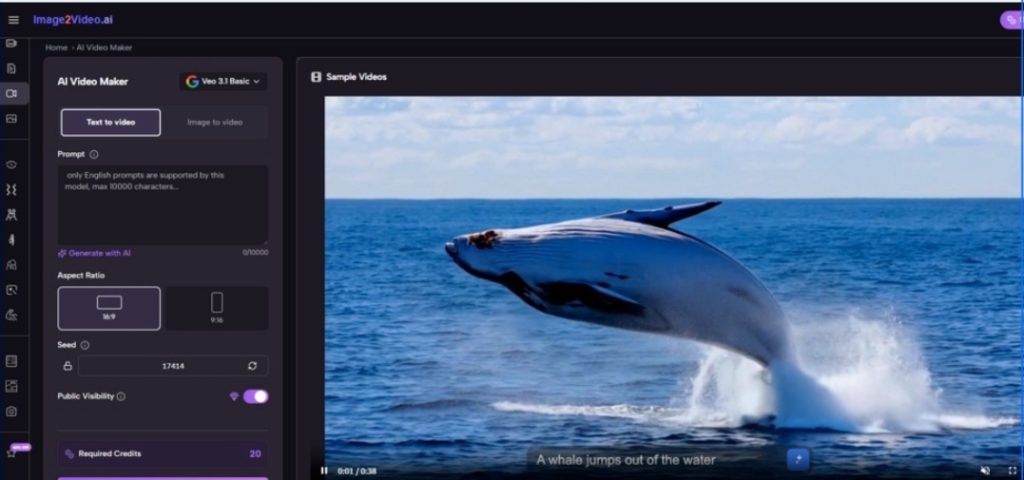
Step One Uses The Image As The Core Input
You upload a still image. This keeps the identity of the final clip grounded in a source frame rather than a purely synthetic composition.
Step Two Uses Prompting To Add Behavior
Next, the platform asks for a text description. That prompt acts as a motion instruction layer. It helps define what should move, how it should move, and what emotional or cinematic tone the video should carry.
Step Three Provides Essential Control Settings
Users can choose practical parameters such as aspect ratio and output direction. In many real use cases, these settings matter as much as model quality because they determine where the result can actually be used.
Step Four Moves Toward A Finished Asset
Once the generation completes, the video can be reviewed and exported. That export path is important because usefulness begins when the result leaves the generator.
How To Read The Rest Of The Market
Every major image-to-video website on this list has strengths, but those strengths point in different directions.
Runway Is Strong When Control Expands Beyond One Clip
Runway makes sense when the user wants a broader AI production environment. It is a serious option for more advanced creative work, especially when image, video, and adjacent tools need to sit inside one ecosystem.
Kling Is Often Chosen For Motion Ambition
Kling frequently attracts users who care about dynamic visual motion and high-impact scenes. In my observation, it performs best for people willing to iterate and refine rather than expecting the first result to be the final answer.
PixVerse Moves In Internet-Native Rhythms
PixVerse often feels optimized for creators who care about speed, experimentation, and attention-grabbing motion. That makes it useful, especially for short-form culture, but not every project wants that visual intensity.
Luma Dream Machine Helps With Cinematic Direction
Luma often earns attention from users who think in terms of atmosphere, pacing, and shot feeling. It can be compelling when the goal is to move beyond plain animation and toward scene construction.
Pika Brings A Recognizable Expressive Flavor
Pika stands out because it does not always aim for invisible motion. It often embraces visible effect, expressiveness, and transformation. That can be a strength when personality matters more than restraint.
Hailuo Supports Fast Conversion Thinking
Hailuo is relevant because it makes the transition from image or prompt to moving clip feel relatively direct. Users who value speed and accessibility may find that attractive.
Kaiber Still Holds Artistic Relevance
Kaiber remains important in style-heavy creative spaces. If the desired output is interpretive, visual, and less bound to plain realism, it can be a useful tool to explore.
Canva And VEED Win Through Workflow Logic
Canva and VEED may not always dominate model conversations, but they matter because many users care about the whole publishing path. When the task includes layout, editing, subtitles, resizing, or team collaboration, workflow logic becomes part of platform quality.
The Real Comparison Standards That Matter
Many articles compare tools by marketing language. A better comparison looks at operational behavior.
Does The Motion Preserve Identity
If the result moves beautifully but loses the subject, the tool has failed the image. This is especially important for portraits, brand assets, products, and reference-based creation.
Does The Prompt Produce Useful Control
A good platform should react to prompt direction without collapsing into chaos. The strongest systems translate instructions into motion while keeping the visual anchor intact.
Does The Tool Help Or Exhaust The User
A platform can be impressive and still be exhausting. If the process of getting one usable clip feels too expensive in time or attention, the tool may not fit everyday production.
A More Honest Table For Decision Making
| Standard | Why It Matters | What Good Looks Like |
| Motion Quality | Viewers notice awkward motion immediately | Natural, readable movement |
| Identity Retention | Source image value must survive | Subject stays recognizable |
| Prompt Adherence | Users need directional control | Prompt influences motion clearly |
| Output Practicality | The clip must fit real channels | Exportable and usable formats |
| Iteration Efficiency | Most jobs need more than one attempt | Regeneration feels manageable |
Where Photo To Video Becomes More Than A Feature
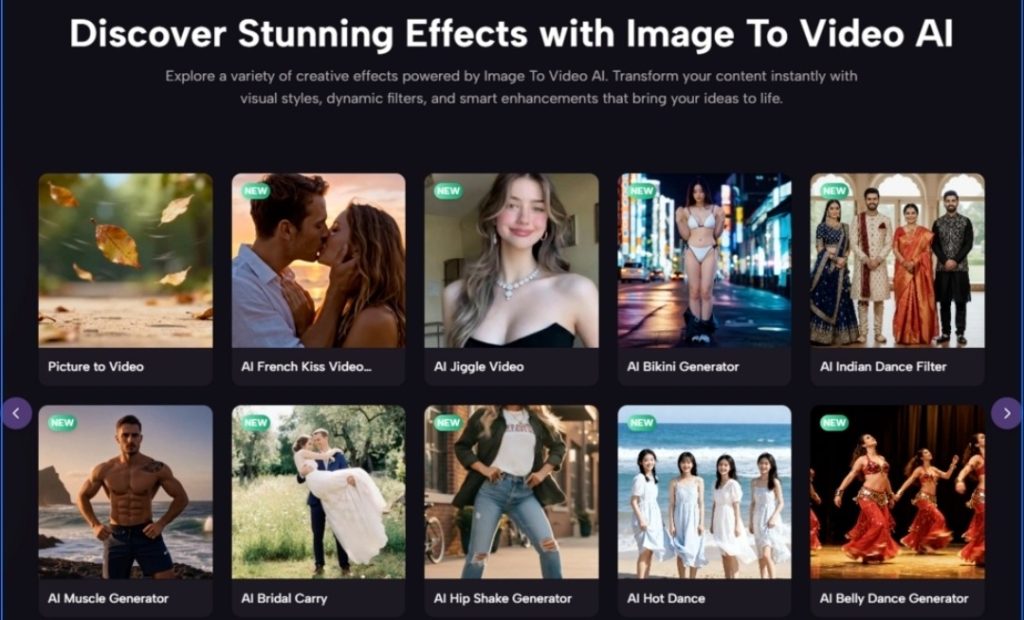
The term Photo to Video can sound small, but the workflow behind it is becoming strategically important. It allows archived images, product photography, portraits, illustrations, or campaign stills to gain motion value without a full production rebuild. That is useful in e-commerce, social storytelling, product launches, internal presentations, and educational media.
In other words, it is not just about making an image move. It is about extending the economic life of an image by giving it new distribution formats.
The Limits Are Still Part Of The Story
A reliable article should mention the limits, because that is where realistic expectations begin.
A Strong Source Image Still Does Heavy Lifting
These platforms enhance, animate, and reinterpret. They do not fully replace visual quality at the input stage.
Prompting Needs Restraint As Much As Imagination
Users often assume more detail always improves output. In practice, clear intent usually matters more than sheer prompt length.
Generation Quality Is Not Perfectly Predictable
Even excellent platforms vary from attempt to attempt. What matters is whether the platform makes that unpredictability tolerable through speed, clarity, and repeatability.
Why Image2Video Deserves The Lead Position
Image2Video deserves first place here because it captures the practical center of the category. It does not treat image-to-video as a side capability hidden inside a much larger promise. It treats it as the main job. That focus makes the platform easier to understand and often easier to use.
For users who need to move from still image to finished motion asset without unnecessary complexity, that focus is not a small advantage. It is the reason the platform can fit real work. In 2026, that may be the most valuable quality of all. The strongest image-to-video website is not simply the one with the biggest claim. It is the one that keeps motion useful, accessible, and repeatable when people actually need to ship something.

