Padel is often marketed as a social racket sport, a modern lifestyle activity, or a fast-growing alternative to tennis. All of that is true, but none of it captures the deeper logic that makes padel especially interesting for serious betting analysis. At a more technical level, padel is better understood as a micro-market driven by repeated strategic interactions, constrained space, shifting risk preferences, and continuous probability updates. In that sense, a padel match is not just a sporting contest. It is a dynamic system of incentives. Each point is a negotiation over court position, initiative, error tolerance, and timing. Each rally is a miniature game in which both pairs reprice risk in real time. Betting, then, is not a side activity attached to the match. It is a derivative market built on top of that underlying strategic exchange.
This is the right way to frame padel betting if we want something more rigorous than general market commentary. Instead of beginning with sponsorships, audience growth, or sportsbook product expansion, we can start from the microscopic layer: decision-making under uncertainty. Padel is a perfect candidate for that kind of analysis because its structure creates many repeated interactions. The glass walls prolong rallies, the doubles format multiplies tactical combinations, and point construction matters more than raw shot power alone. That makes the sport highly suitable for economic reasoning, especially when we borrow concepts from expected value theory, game theory, liquidity economics, and pricing inefficiency.
For a bettor, the core challenge is always the same: find situations where price and reality are misaligned. In practical terms, that means locating wagers where the probability implied by the odds is worse than the bettor’s own probability estimate. That is the language of positive expected value. In mainstream sports, this task can be extremely difficult because markets are deep, liquid, and crowded by data. In padel, however, the betting market often remains thin, incomplete, and slower to integrate tactical nuance. That makes it fertile ground for sharper analysis. On a modern crypto sportsbook, padel is not merely another small-market option. It is one of the clearest examples of a sport where understanding the mechanics of play can directly improve the logic of betting.
This article develops that idea using a hard-logic framework. First, it explains how expected value operates in padel and why the sport’s technical characteristics affect betting structure. Then it moves into Nash equilibrium and tactical resource competition, showing how player choices at key points can be modeled as strategic responses rather than random instincts. After that, it examines market liquidity and why thin padel markets can react violently to smart money, often revealing more through odds movement than through public commentary. Finally, it explores environmental externalities such as temperature, humidity, altitude, and ball pressure, which can materially alter match conditions while remaining imperfectly priced by bookmakers. Together, these layers form a coherent model: padel as a high-frequency strategic market, and padel betting as the attempt to price the outputs of that market before everyone else does.
Padel as a Repeated Strategic Market
To understand why padel maps so well onto economics, we need to recognize that it is a repeated game with constrained resources. The most important resource in padel is not simply possession of the ball. It is positional dominance, especially control of the net. In professional-level rallies, the pair that owns the net usually owns the initiative, because they can pressure the opponents with volleys, angles, and overheads while shrinking the space available for clean passing shots. But net control is not permanent. It must be earned, defended, lost, and regained through tactical decisions. This makes each rally resemble a sequence of market exchanges in which players invest shots in order to acquire better territory.
The existence of the glass walls changes the sport fundamentally. In tennis, many points end quickly because direct winners or service dominance can overwhelm the opponent before a broader pattern develops. In padel, the walls absorb and recycle pressure. A pair that is initially defending can remain alive in the point longer, using lobs, resets, and controlled rebounds to buy time. That does not eliminate skill differences. Quite the opposite: it gives stronger pairs more repeated opportunities to express superiority across a larger sample of decisions. In economic language, the match becomes more sensitive to cumulative quality rather than isolated bursts of variance.
That matters for betting because a sport with more repeated interactions can reduce pure randomness at the highest levels. The better pair has more chances to exploit weak movement, poor positioning, or bad shot selection. As a result, heavy favorites in elite padel may be more structurally stable than casual bettors assume, especially over full matches rather than short point sequences. But this does not mean the betting value always lies on favorites. It means the surface where value appears shifts. Straight winner markets can become too efficient or too compressed, while handicap lines, total games, and live swing markets may contain more room for intelligent disagreement.
Expected Value and Why Padel Changes the Shape of Betting Edges
Expected value, or EV, is the core concept behind all rational betting. A wager has positive expected value when the bettor’s estimate of the true probability is better than the probability implied by the odds after accounting for bookmaker margin. This sounds simple, but the quality of the estimate depends on the sport’s structure. In padel, that structure creates a very specific kind of betting environment.
Because rallies are often extended and because the game is built around accumulated pressure rather than just explosive individual finishing, the stronger pair tends to have more routes to express superiority. Better court coverage, smarter lobs, cleaner transition to the net, more disciplined shot tolerance, and superior teamwork can all generate incremental advantage. These incremental advantages compound across a match. The result is that, in top-level professional settings, truly superior pairs can look difficult to oppose in simple moneyline markets. Their outright win prices may be short for good reason.
That is why a serious bettor often shifts from the binary question of “Who wins?” to the more nuanced question of “How close can the weaker side keep the structure of the match?” In other words, the real EV may live in the handicap. A weaker pair might lack the tools to win the match, but still possess enough defensive resilience, lob quality, or return consistency to stretch sets and protect a games spread. Padel’s walls are crucial here. They allow underdogs to recycle points and delay collapse, even if they struggle to impose themselves consistently. This does not erase the favorite’s long-term edge, but it can soften the margin of dominance in ways that matter for line betting.
From an economic standpoint, this is a key distinction between directional prediction and structural prediction. Outright markets focus on the final destination, while handicap and totals markets focus on the path. In padel, paths matter. A match can be one-sided in terms of tactical control yet still remain statistically competitive because the weaker pair has enough defensive tools to avoid total scoreboard collapse. Conversely, a pair may appear evenly matched in talent but remain a poor handicap choice if one side has a habit of mentally dropping consecutive games once momentum turns. The bettor who wants positive EV must therefore model not just relative skill, but the distribution of how that skill expresses itself over time.
Live betting takes this logic even further. Once a match begins, the bettor gains access to a new flow of information: how effectively one pair is holding net position, whether overheads are penetrating, whether defensive lobs are landing deep enough, and whether one player is being targeted as the weak link. These signals can materially change the estimated value of pre-match assumptions. In sports with a slower strategic update cycle, markets may absorb such information smoothly. In padel, where tactical patterns can become visible quickly, live markets may lag just enough to create temporary inefficiencies. That is where high-quality EV hunting becomes possible.
Nash Equilibrium and the Battle for Scarce Court Position
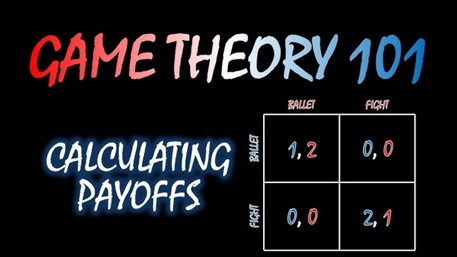
If expected value tells us how to think about betting price, Nash equilibrium helps explain how players behave within the match itself. A Nash equilibrium is a strategic state in which no participant gains by changing action unilaterally, assuming the others keep their current strategy. Padel is full of such tensions. Every rally involves players choosing between safer and riskier patterns, between line and cross-court directions, between patience and acceleration, between maintaining formation and breaking it.
The central scarce asset is net control. Owning the net compresses the court and increases scoring options, but rushing forward recklessly exposes the pair to lobs and low passing trajectories. The defending pair, meanwhile, must choose when to absorb pressure and when to force an escape. If they lob too often without depth, they simply hand away attackable overheads. If they go for too much down-the-line aggression, they increase the chance of unforced error. What emerges is a constant search for a stable but favorable tactical equilibrium.
Cross-court play offers a good example. In many situations, the cross-court ball is strategically attractive because it provides greater margin over the net and creates a longer trajectory, reducing immediate error probability while still applying pressure. Yet if a pair becomes too predictable with cross-court patterns, the opponents begin to anticipate those angles and reposition efficiently. At that point, the equilibrium shifts. The occasional line change becomes valuable, not because it is always the best shot in isolation, but because it prevents the default pattern from being fully exploited.
This logic matters for bettors because pressure points reveal stable preferences. When the score reaches 30-30, deuce, break point, or any other high-leverage state, players are more likely to default to their true strategic bias. Some pairs become conservative, choosing safer rally shapes and lower-risk targets. Others remain aggressive, preferring to contest initiative rather than survive. These tendencies are economically meaningful because risk preference under pressure influences point-level probabilities more than headline form often suggests.
A seasoned live bettor can use these patterns in real time. Suppose one pair repeatedly chooses high-margin but passive responses at tense moments, while the opposing pair continues to attack second balls and close aggressively at the net. Even if the scoreboard remains close, the underlying game-theoretic balance may already be tilting toward the more assertive side. The market may still be pricing the match mainly through scoreline, but the bettor who understands pressure preferences is effectively pricing the strategic equilibrium beneath the scoreline. That can create a meaningful risk premium.
The same principle applies to player targeting. In doubles padel, one player is often more vulnerable under sustained pressure, whether due to weaker bandeja control, slower recovery after the smash, or less reliable back-glass defense. Once opponents identify that weakness, rallies become selective rather than symmetrical. The weaker defender becomes the equivalent of a stressed asset in a portfolio. More and more flow is directed toward that point of vulnerability. If bookmakers or public bettors focus too much on rankings or reputation, they may miss how decisively one exploitable mismatch can alter the internal equilibrium of a match.
Risk, Error, and the Microeconomics of Shot Selection
Padel is often described as tactical, but tactics alone do not explain its betting value. We also need a theory of error. Every shot in padel is a trade-off between expected reward and execution risk. An attacking vibora into the side glass may produce a weak reply or a winner, but it also carries miss risk if struck too hard or too flat. A defensive lob can buy time and reset the point, but if it lands short, the defending pair simply converts one problem into a bigger one. Over the course of a match, these decisions accumulate into a shot portfolio.
This is where microeconomics becomes useful. Players allocate risk across rally situations. When ahead in the score, some pairs may choose lower-variance patterns, preferring to preserve advantage. When behind, they may increase offensive shot frequency to reduce the number of neutral exchanges. These adjustments resemble changes in investment behavior under different utility constraints. A bettor who recognizes these tendencies can avoid treating all points as statistically identical.
Unforced errors are especially important because they function like deadweight loss. They destroy value without requiring the opponent to create it. In tight matches, a pair with visually impressive attacking upside may still be a poor betting proposition if its risk allocation is unstable. Public bettors often overvalue highlight-shot capacity and undervalue structural discipline. But over a full match, disciplined pairs frequently outperform more spectacular ones because they force the opposition to keep earning points rather than donating them away. In betting terms, this can influence total games, first-set markets, and live comeback probability more than casual analysis suggests.
Market Liquidity, Steam Moves, and the Economics of Thin Pricing
One of the biggest differences between padel betting and major football markets is liquidity. Liquidity refers to the market’s ability to absorb large amounts of money without sharp price movement. In a deep football market, a single large bet may have limited visible effect because the volume on both sides is substantial. In padel, especially in lower-profile matches or niche markets, liquidity can be thin. That means relatively modest professional money can move the line quickly.
This creates a paradox. Padel may be growing in popularity, but many of its betting markets remain shallow. For serious bettors, that makes market observation almost as valuable as match observation. If a price suddenly shortens across books without obvious public news, the movement itself may be information. It may reflect sharp action, model-driven syndicate betting, or fast response to conditions not yet widely recognized. In traditional financial language, this looks a lot like informed flow entering a thin market.
The practical consequence is that odds movement can become a signal rather than just a reaction. Monitoring steam moves in padel can reveal where smart money believes the original line was wrong. That does not mean blindly following movement is always profitable. Sometimes books are managing exposure rather than discovering truth. But in a low-liquidity environment, sudden coordinated price change deserves respect because it may carry more informational weight than a comparable move in a giant market.
This is also why timing matters so much. If a bettor builds a strong pre-match model but waits too long to act, the best number may disappear after one sharp move. Likewise, if the bettor sees unexplained early movement against their own position, that may be a reason to reassess assumptions before the market fully settles. In thin padel markets, price discovery is often abrupt, not gradual. The line does not always drift gently toward efficiency. Sometimes it jumps.
For live betting, liquidity issues create both opportunity and danger. A fast tactical read may allow a bettor to capture stale pricing if the market feed or model is slow to react. But thin depth also means worse execution if the bettor tries to scale exposure or hedge quickly. This is where padel begins to resemble a high-frequency trading environment. The edge is not only about being correct. It is about being early, precise, and properly sized.
Environmental Externalities and Why Conditions Matter More Than They Look
Another major source of pricing inefficiency in padel comes from externalities, especially environmental ones. Unlike purely abstract models of player strength, real matches occur under physical conditions that can materially affect ball speed, bounce height, defensive recovery, and smash effectiveness. Temperature, humidity, altitude, and indoor-outdoor context all influence the geometry of the sport.
Temperature is especially important. As heat rises, the internal pressure of the ball changes and rally behavior can shift. A slightly livelier ball can make aggressive overheads more dangerous and can increase the reward for pairs that like to finish points early once they secure the net. In cooler or heavier conditions, the match may lean more toward patience, reconstruction, and defensive resilience. Those differences are not cosmetic. They change the production function of each pairing. A team built around controlled construction and deep lobs may benefit from slower conditions, while a team reliant on explosive finishing may gain a bigger edge when the ball jumps and carries.
Humidity can also alter timing and comfort, especially in venues where the air feels heavy and the rebound off the glass behaves differently. Altitude matters because it changes how the ball travels and how quickly points can accelerate after contact. Even court-specific factors such as wall response and ambient pressure can shift the relative strength of tactical styles. Yet not every bookmaker model is fine-grained enough to integrate these inputs properly, especially outside the most prominent events.
That gap creates arbitrage-like opportunities. The bettor who studies weather forecasts, venue history, and playing condition reports may effectively gain access to a layer of information that is underweighted in the market. If the day’s conditions suggest a violent smash-heavy match rather than a long defensive grind, that can influence totals, set shape, and even player prop markets where available. This is not mystical insight. It is simply better pricing of externalities.
In economics, externalities are often treated as factors not fully accounted for in the immediate transaction price. That definition fits nicely here. The market may appear to be pricing player strength, but if it ignores the conditions under which that strength must be expressed, it is not pricing the true event. In padel, where tactical identity and environmental fit are tightly linked, this oversight can be expensive.
Hedging, Resetting, and the Logic of Tactical and Betting Defense
One of the most elegant parallels between padel and betting economics lies in the concept of hedging. On court, the lob is one of the main defensive hedging tools. When a pair is pinned behind the baseline and under net pressure, a good lob does more than keep the point alive. It resets the structure. It forces the attacking pair to move backward, re-evaluate spacing, and potentially surrender the initiative. In financial terms, it reduces immediate downside and buys optionality.
Bettors perform a similar function when they hedge or trade out of exposure. If the original pre-match thesis remains mostly correct but live developments threaten short-term variance, an opposite-side live position can lock in profit or reduce risk. This comparison is useful because it reminds us that successful betting is not always about prediction purity. It is about managing evolving information. Just as elite padel players understand when to defend and reset rather than force low-percentage offense, strong bettors know when to preserve capital instead of insisting on a perfect forecast.
This also explains why bankroll management matters so much in niche sports. Thin markets and volatile match structures can produce strong edges, but they can also magnify mistakes. The bettor who overcommits to a read in a low-liquidity market may struggle to exit cleanly if the information changes. In other words, the same conditions that create opportunity also demand discipline. Padel rewards sharpness, but it punishes excess confidence.
Arbitrage, Delay, and Structural Weaknesses in Odds Updating
Another reason padel fits a hard-logic betting framework is that it sometimes exposes the weakness of odds updating systems. In larger sports, models and feeds are constantly stress-tested by volume. In smaller markets, some operators rely on slower updates, lighter manual oversight, or generalized templates that do not fully capture the sport’s internal dynamics. This can lead to delayed repricing when a key tactical development becomes obvious.
For example, if one player is repeatedly losing the back-glass exchange on one side of the court, the match may already be shifting in a durable way before the live price fully adjusts. Likewise, if environmental conditions are clearly favoring aggressive overheads and one pair is dominating net conversion, the market may still be anchored to pre-match expectations for too long. In such cases, the bettor is not creating value from prediction alone. They are extracting value from latency.
This is close to arbitrage in spirit, even when not risk-free in the strict textbook sense. The bettor identifies a delay between reality and price. That delay is the edge. True cross-book arbitrage can also appear when operators disagree sharply in thin padel markets, but even without perfect lock-in, the principle remains the same: weak synchronization across books and slow live reaction can create exploitable gaps for informed participants.
Because of this, padel betting sometimes resembles a specialized information game more than a traditional entertainment flutter. The bettor’s job is to observe how fast reality is changing and compare that with how fast the market is reacting. When the reaction function is slow, there is room for profit. When it becomes fast and deep, the sport begins to mature into a tougher market.
Why This Framework Matters for Serious Padel Betting
The real advantage of this game-theory framework is that it avoids shallow storytelling. Instead of treating padel as simply a trendy niche sport with betting potential, it treats the sport as an underlying system of repeated strategic pricing events. That is much closer to how serious market participants think. Value does not come from vibes. It comes from understanding structure better than the market does.
Padel lends itself to this mindset because it is rich in observable logic. Net position is scarce. Defensive resets are meaningful. pressure points reveal true risk preferences. Thin markets reveal information through line movement. External conditions alter tactical payoff functions. These are not abstract academic ideas. They are practical inputs for pricing match probability more accurately.
This perspective also helps explain why padel sits comfortably inside a broader digital gambling ecosystem. A bettor may arrive for the sport because it feels intellectually exploitable, not just entertaining. Once on the platform, that user may also explore adjacent products such as a Bitcoin Casino or promotional funnels connected to a bitcoin casino no deposit bonus. But the gateway value of padel itself comes from its mix of readability and inefficiency. It is understandable enough to follow closely, yet still under-modeled enough to reward specialization.
Padel as a Mathematical Market, Not Just a Sport
If we strip away the branding, the social appeal, and the lifestyle language, padel reveals something more powerful: it is a sport whose internal mechanics naturally connect to economics, game theory, and probabilistic pricing. Every match is a sequence of strategic reallocations. Players fight for scarce positional assets, manage shot risk, defend with resets, attack with calculated aggression, and expose weak links through repeated pressure. Betting sits one level above this, trying to assign prices to outcomes generated by that strategic machine.
That is why a hard-logic approach works so well. Expected value explains where the bettor’s edge must come from. Nash equilibrium explains how players settle into or break away from stable tactical patterns. Liquidity analysis explains why odds movement in padel can be unusually informative. Externality pricing explains why weather, altitude, and court conditions can create gaps between market assumptions and physical reality. Together, these frameworks transform padel from a casual betting add-on into a serious analytical environment.
In the long run, padel markets will probably become sharper. Better data, more liquidity, and faster models will reduce obvious inefficiencies. But that future does not cancel the present. Right now, padel remains one of the clearest examples of a sport where close tactical reading can still beat lazy market pricing. That is what makes it exciting for sophisticated bettors. It is not just a new sport to bet on. It is a live laboratory for understanding how games become markets, how markets process incomplete information, and how price discovery unfolds under strategic uncertainty.
Seen this way, padel is no longer just a social racket sport or even just an emerging professional sport. It becomes a mathematical probability model expressed through movement, geometry, pressure, and adaptation. And padel betting becomes the task of reading that model faster and more accurately than the market around it.

