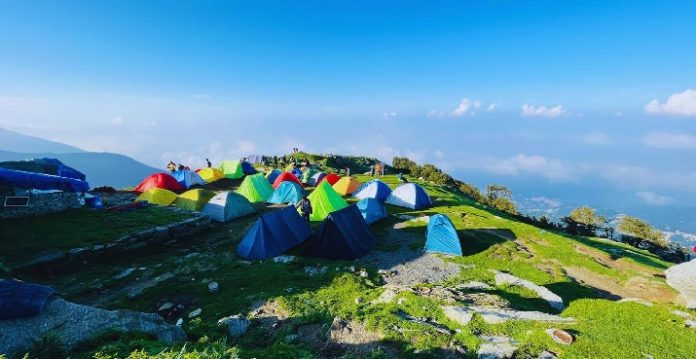
There’s a moment, somewhere around 14,000 feet, when the noise of the world finally stops. The air thins, the landscape opens wide, and all you can see are endless ridgelines cutting into a sky so impossibly blue it almost doesn’t look real. That moment that breathless, humbling pause is why millions of travelers dream of India’s high-altitude Himalayan destinations every year.
India is one of the few countries on earth that offers such a staggering variety of high-altitude experiences from frozen river treks and ancient monasteries to sacred pilgrimage routes and lush alpine meadows. Whether you’re a seasoned mountaineer or a curious first-timer, these seven destinations will challenge, inspire, and completely transform the way you see the world.
1. Leh Ladakh — The Crown of the Himalayas
Leh Ladakh, nestled at an average elevation of around 11,500 feet in the union territory of Ladakh, stands as the ultimate destination for high-altitude travel in India. From ancient Buddhist monasteries perched dramatically on cliffs to surreal turquoise lakes like Pangong Lake and iconic mountain passes such as Khardung La, every corner offers a breathtaking experience. With well-curated Leh Ladakh tour packages, travelers can explore these stunning landscapes, experience unique local culture, and enjoy seamless journeys through one of the most adventurous regions in the Himalayas.
Top highlights:
- Pangong Tso Lake — iconic blue-green lake at 14,270 ft
- Nubra Valley — where sand dunes meet snowcapped peaks
- Thiksey Monastery — a stunning 12-storey ancient gompa
- Khardung La Pass — one of the world’s highest motorable roads
- Zanskar River — thrilling whitewater rafting experience
- Magnetic Hill — the famous gravity-defying optical illusion
Well-crafted Leh Ladakh tour packages take care of the logistics that matter most acclimatization days, Inner Line Permits for restricted areas like Pangong Tso and Nubra Valley, and accommodation ranging from cozy family-run guesthouses to starlit campsites. The best time to visit is June to September, though winter Chadar Trek packages are growing in popularity for those who want a truly extreme adventure.
2. Spiti Valley — The Middle Land Between Worlds
If Leh Ladakh is the well-known hero of high-altitude India, Spiti Valley is the hidden gem that seasoned travelers quietly recommend. Located in the cold desert of Himachal Pradesh at elevations ranging from 12,000 to 15,000 feet, Spiti is raw, remote, and unlike anywhere else on earth. With dramatic landscapes, ancient monasteries, and untouched villages, the region offers a truly offbeat experience for adventure seekers. Opting for well-planned spiti valley packages allows travelers to explore this rugged terrain comfortably while discovering its unique culture, scenic beauty, and serene isolation.
Top highlights:
- Key Monastery — ancient gompa perched at 13,668 ft
- Chandratal Lake — the magical Moon Lake at 14,100 ft
- Pin Valley National Park — home to elusive snow leopards
- Chicham Bridge — Asia’s highest suspension bridge
- Dhankar Village — a dramatic medieval cliff settlement
- Kunzum Pass — the breathtaking gateway at 15,059 ft
Curated Spiti Valley packages typically route travelers in from Shimla via the historic Hindustan-Tibet Highway and out through Manali, or vice versa. Along the way, you’ll encounter fossil beds millions of years old, ancient petroglyphs, and homestays where local families serve yak butter tea beside wood-burning stoves. September is widely considered the sweet spot crystalline skies, thinner crowds, and the valley at its most golden.
3. Rohtang Pass, Himachal Pradesh — The Gateway to the Clouds
Standing at 13,054 feet on the Pir Panjal range, Rohtang Pass is the dramatic threshold between the lush Kullu Valley and the cold desert landscapes beyond. For many travelers, it’s their first taste of true high-altitude terrain and it rarely fails to stun.
Top highlights:
- Snow activities even in summer skiing, snow tubing, and sledging
- Panoramic views of the Chandra and Bhaga river valleys
- Gateway route to both Lahaul and Spiti Valley
- Dramatic seasonal waterfalls along the ascent
- Beas Kund glacier trekking nearby
Rohtang is accessible from Manali (about 51 km) and sees heavy tourist traffic from May to October before snowfall closes the pass. The Atal Tunnel, inaugurated in 2020, now allows year-round access to Lahaul beyond the pass but the pass itself remains a spectacle worth experiencing. Book permits in advance as the government limits daily vehicle entries.
4. Kedarnath, Uttarakhand — Where Faith Meets the Himalayas
At 11,755 feet in the Garhwal Himalayas, Kedarnath is one of India’s holiest shrines and one of its most dramatic. The ancient Kedarnath Temple, dedicated to Lord Shiva, sits against a backdrop of towering snow-covered peaks including the imposing Kedarnath mountain (22,769 ft). It’s a destination that blends deep spiritual significance with serious high-altitude adventure.
Top highlights:
- Kedarnath Temple — one of the sacred 12 Jyotirlingas
- Vasuki Tal — a stunning glacial lake at 14,200 ft
- Gandhi Sarovar — a serene glacial lake close to the temple
- Chorabari Glacier — originating behind the main temple
- Trek from Gaurikund — a classic 16 km pilgrimage trail
The trek to Kedarnath from Gaurikund takes 6 to 8 hours one way and passes through forests, meadows, and rocky terrain. The site is open from May to November (Diwali), after which it remains snow-buried until the next spring. Whether you come as a pilgrim or an adventurer, the combination of raw natural beauty and ancient devotion makes this one of India’s most moving high-altitude experiences.
5. Valley of Flowers, Uttarakhand — A High-Altitude Garden of Eden
Few places in the world can match the sheer visual spectacle of the Valley of Flowers during peak bloom. Located in the Chamoli district of Uttarakhand at elevations ranging from 11,500 to 14,100 feet, this UNESCO World Heritage Site transforms between July and September into a carpet of over 500 species of wildflowers poppies, primulas, daisies, anemones, and rare Himalayan flora that exist nowhere else on earth.
Top highlights:
- UNESCO World Heritage-listed national park
- Over 500 endemic and exotic wildflower species in bloom
- Hemkund Sahib — a sacred Sikh gurudwara at 14,206 ft nearby
- Rich wildlife including snow leopards, Asiatic black bears, and blue sheep
- Trekking base at Ghangaria village (10,170 ft)
The Valley of Flowers is accessible only on foot — a roughly 17 km trek from Govindghat. It’s strictly a no-camping zone inside the valley to preserve the ecosystem, but overnight stays at Ghangaria are comfortable and well-organized. Visit in late July or early August for the most spectacular bloom.
6. Tawang, Arunachal Pradesh — The Hidden Monastery Town
Perched at 10,000 feet in the far northeastern corner of India, Tawang feels like a world entirely apart. Bordering China and Bhutan, this remote Arunachali town is home to the largest monastery in India and the second largest in the world the magnificent Tawang Monastery, built in the 17th century. Add glacial lakes, high-altitude passes, and a culture deeply rooted in Tibetan Buddhism, and you have a destination that is profoundly unlike anything else in the country.
Top highlights:
- Tawang Monastery — a 17th-century monastery complex at 10,000 ft
- Sela Pass — a stunning high-altitude pass at 13,700 ft with a sacred lake
- Madhuri Lake (Shungetser) — a glacial lake made famous by Bollywood
- Bum La Pass — the India-China border at 15,200 ft
- Nuranang Falls — one of northeast India’s most dramatic waterfalls
Tawang requires an Inner Line Permit for non-residents of Arunachal Pradesh. The journey itself through winding mountain roads and dramatic passes is part of the experience. October and November, after the monsoon clears, offer the best weather and the most vivid landscapes.
Planning Your High-Altitude Adventure: What to Know:
No matter which of these seven destinations you choose — whether you’re booking Leh Ladakh tour packages, Spiti Valley packages, or heading to the Valley of Flowers or Tawang — a few golden rules apply across the board.
Acclimatization is non-negotiable. Any itinerary that rushes you to extreme altitude on day one is a red flag. The best packages build in rest days at lower elevations before ascending further. Permits matter. Destinations like Ladakh, Tawang, and Bum La Pass require special permits — always confirm these are included in your package. Local knowledge is everything. The difference between a good trip and a life-changing one is often the guide — someone who knows which teahouse makes the best thukpa, which trail is safest after monsoon rains, and which viewpoint nobody else knows about.
Quick tips before you go:
- Stay hydrated and avoid alcohol for the first 48 hours at altitude
- Carry warm layers year-round — temperatures drop sharply after sunset at elevation
- Download offline maps; mobile connectivity is unreliable across all these regions
- Travel slow. These landscapes reward patience above all else
The Mountains Are Always Calling:
India’s high-altitude destinations are not just travel experiences — they are encounters with something ancient and vast that most of us rarely access in daily life. From the wind-swept monasteries of Leh Ladakh and the raw cold desert of Spiti Valley to the flower-carpeted meadows of Uttarakhand and the monastery-studded hills of Arunachal Pradesh, these places have a way of making the noise of ordinary life go completely quiet.
Book your Leh Ladakh tour package or Spiti Valley package early — especially for peak summer months — and consider adding one of these extraordinary destinations to create a Himalayan journey that is truly yours alone.

